
Book Overview & Thoughts

“AI may produce insights that are true but beyond the frontiers of human understanding” – Age of AI and Our Human Future (Pg. 78)
NVIDIA’s stock price
Will Smith eating spaghetti
Sarah Connor?!
These are the closest associations most of us have when we think of AI.
Who can blame us?
For decades we’ve been told that AI will either end our civilization Terminator-style or will usher in a infinite utopia. In all this hyperbole is there any thread of truth? According to Age of AI and Our Human Future both possibilities are.
Who Wrote it?



It seems like everyone has a book out about AI, but not many with these credentials. Henry Kissinger, Eric Schmidt, and Daniel Huttenlocher co-wrote and released Age of AI just before Kissinger’s passing in 2023. The combined expertise of these authors and an advisory panel composed of three-letter organizations, academicians, and billionaires, make this such a compelling read. If there’s any view on AI that you should take seriously, this is probably it.
Give Me the Gist…
The Age of AI and Our Human Future is the philosophy, future, and geopolitical power-games of AI wrapped into 220 pages. It attempts to answer two fundamental questions: Who we are and where we’re going.

OK, I’m Listening. Tell Me More
The authors’ view of our future comes from a paradigm called historical progressivism. This perspective propounds that all life, including human societies, evolve and progress through technical, social, and cultural advancements. In other words, everything moves toward a more perfect union. For the authors, AI is the inevitable next phase of that process. A partnership with AI is mandatory. Human beings have reached our capacity to act effectively in this rapidly-evolving world without assistance from AI. The irony is, AI may independently advance beyond our capacity to control it, limiting or even stunting, human growth indefinitely.

I’ll Get AGI Before You Do!
A global race has started between allied nation-states and corporations to create the first AGI or Artificial General Intelligence. AGI is a supercomputer that operates millions of specialized AI systems simultaneously to find original solutions or for predictive analysis.
I can hear AI experts yelling at the screen: “AGI is SO much more complex than that!” For simplicity’s sake, hang with me.
An AGI system would be able to analyze data and calculate probabilities surpassing humanity’s collective reasoning ability. Whoever controls that technology first, would have a power beyond any historical comparison.
The race to AGI mirrors the nuclear arms race which concluded in the development and deployment of a nuclear bomb. But in a carnivalesque inversion to nuclear destructive capabilities, AGI is the ultimate creative power. This non-human intelligence holds the potential to define, shape, and alter foundational perceptions of reality.

Are We There Yet?
AI is now used for a range of applications including entertainment choices, generating engaging content, dynamic systems, images and video. This partnership will continue to evolve and develop new dynamics for all aspects of our work and leisure. The information we see, the products we use, and the art we experience influences our sense of truth. AI will increasingly become more fundamental to that process. The question is whether those changes will be ultimately beneficial or destructive.
“In an era in which reality can be predicted, approximated, and simulated by an AI that can assess what is relevant to our lives, predict what will come next, and decide what to do, the role of human reason will change. With it, our senses of our individual and societal purposes will change too.” pg. 179
Themes
1. Human Perception of Reality

According to Age Of AI, human’s information-gathering and truth-making process has always been filtered through biological lens. Assistance by non-human intelligences can clear away inherent bias providing access to realms of reality outside our limited view.
An example of this is Halicin.
Halicin (named after HAL, the intelligent system in 2001: Space Odyssey) is an antibiotic discovered by an AI at M.I.T using pattern recognition processes defying scientists’ understanding. Through incomprehensible ways it was able to detect the most effective molecule against harmful bacterial growth. The implication of this is that levels of reality beyond human experience and reason are accessible to AI systems. AI can discover patterns hidden to humans and finds unique solutions to problems that would’ve remained elusive.
2. Geopolitical World Order

The future of humanity will be decided by how much leeway we give to military applications and technological curiosity. In the same way that nuclear arms proliferation required an international bilateral governing body, AI would need one as well. This organization would be given authority to oversee, define, and manage international goals and advancements of AI. It would also ensure a global balance of power, order, and stability to prevent malicious actors from terrorizing global economies and infrastructure. For the authors’ it is a race against time to prevent short-sighted military and corporate applications from causing chaos.
3. Human Adoption and Acceptance
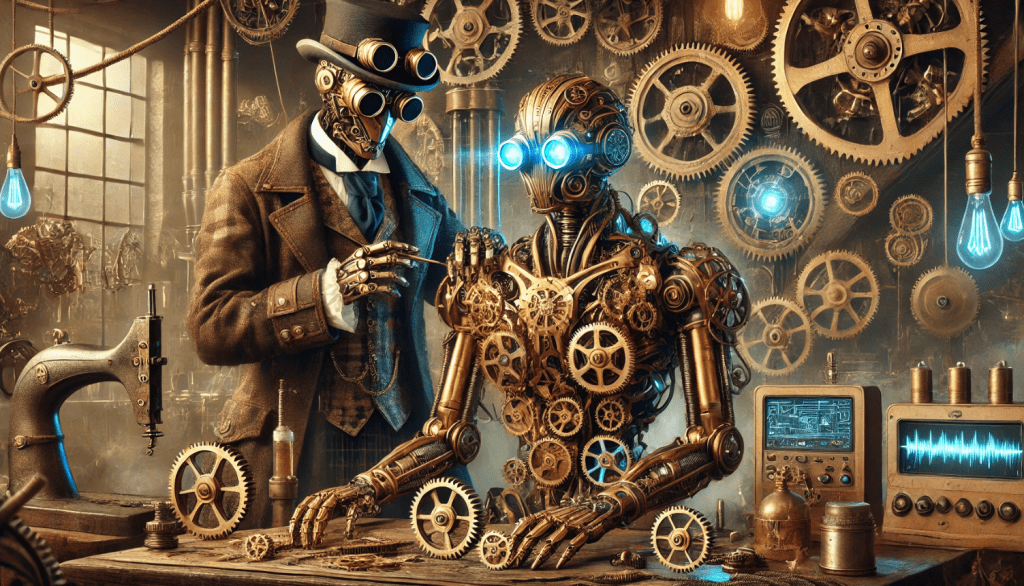
The decision-making process of AI systems are a black box. AI can’t tell you how it arrived at any given answer. Neither can the coders who created it.
It just did.
Humans have relied on two specific ways to come to a conclusion: Observational Experience (reason) and Faith or Intuition. Reason and faith are vectors of understanding that make it possible for any person to hold the same conclusion or axiom as another. Logic and experiential knowledge are the tools we use to judge decisions and conclusions, but this isn’t possible with AI. Like the Oracle of Delphi, answers come from unseen sources, through bits of information unavailable to the rest of us. The question is, how much should we accept as true or real, and how much should/can its decisions be auditable?
“There may be an upcoming shift in which human reason may not be the most informative way of knowing or navigating reality.”
Pg. 181
4. Human Identity

This last theme challenges our notion of what defines human flourishment, fulfillment and self-perception. What will be required of humanity to find fulfilling work? What skills and uniquely human capabilities do we have that AI doesn’t? Humans have come to differentiate ourselves from the rest of the animal kingdom by our intelligence. If we no longer have a monopoly on intelligence, what do we have? Where, in a culture of productivity and efficiency do we place our value?

Some Conclusions
The Industrial Revolution incentivized human productivity to mirror a machine. Our value is measured in efficiency, consistency, and lack of emotional attachment. We have trained ourselves for millennia to be productive members of a society and to earn our keep. Productivity has been how we define ourselves and each other. When we introduce ourselves we always start with “what do you do for a living?” Associating who we are only with what we do.
Now we enter into the current human identity crisis. Compounded with loss of moral meaning, many feel like the last remnant of themselves, their productive capability, is also vanishing. The Age of AI suggests a need for our collective self identity shift from productivity to meaning.
Embrace? Hide?
What can we do?
The authors’s suggest to engage with AI systems precariously. On a global level technological guard-rails and limitations need to be instituted. On an individual level, it is imperative that we grapple with our personal paradigm of human flourishing. What should we spend our time on and how should we partner with technology to advance our species further.
Lastly, we need to utilize AI systems for human development and not humans for AI development.




Leave a Reply